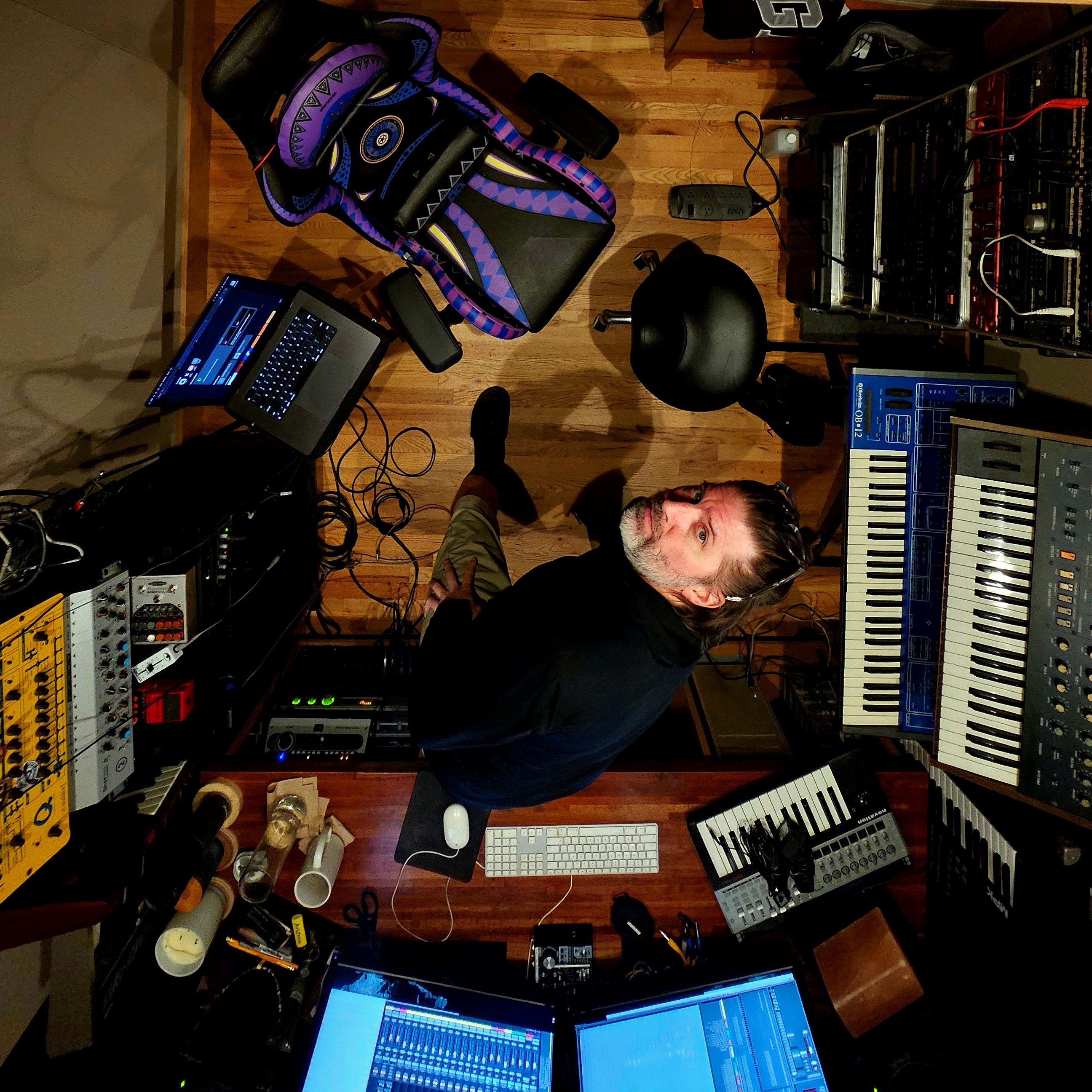
David Sisko: Inside the Creative World of New York Music Producer
Not many musicians in New York are able to produce music as a producer, composer, remixer, mixer, sound designer, and artist. David Sisko is an award-winning, New York City–based creator behind various music productions for global brands such as Netflix, Sega, Lions Gate Film, Universal, NBC, and Sprayground.
Sisko have collaborated with many music clients from Roxy Music and Academy Award–winning director Nickson Fong to major museums (The Metropolitan Museum of Art), poetry legends (Allen Ginsberg), and BandLab (Sound Design). He has worked across pop, EDM, indie, rock, and even music for meditation. He is also behind the voice over recording of video games like Silent Hill 2, Top Gun Hard Lock and Alien Breed. Sisko is a graduate with a Master of Music Technology degree from New York University with a focus on Artificial Intelligence, who is also a founder and owner of Arena 01, an independent record label, and Min Max Studios in New York City.
I had the chance to meet Sisko a few months ago at his fully equipped Manhattan studio, which features two professional recording rooms. We spent time chatting in his workroom and in a cozy, inspiring lounge area. Now, I’ve invited Sisko for a special interview, and even with his busy production schedule, he still makes time to share his experiences and creative insights with the readers. Below is The Creative Talk’s conversation with Sisko.
Q: Hi Sisko, how’s it going? What have you been working on in music production lately?
A: Hi, Naratama! I am good. Thank you for having me on The Creative Talk. I have been working on many different types of projects recently. To name just a few, I composed the music for an entire fashion show for the brand Sprayground for London Fashion Week 2025, I composed music for a golden helicopter sculpture for The Dubai Air Show, I composed the music for a movie trailer (for a film pitch) for Nickson Fong and also working on several albums, including “Trap Poems” by David Aaron Greenberg (poetry and beats), and lately worked for Sandflower’s new EP, “The Radiant Expansion” (Global Alternative Pop). I even recorded indigenous instruments in Abu Dhabi, UAE and Bali, Indonesia earlier this year.
Q: What first inspired you to become a music producer?
A: Like many Music Producers, it was because I was simply so interested in the music on the radio and wondered how it was all made. From that initial curiosity, I discovered that music production tapped into some of my basic core strengths and aptitudes. These include things like a love of technology (synthesizers specifically), creating art, mathematics, helping other create music, creating ‘worlds’ and concepts and also making people feel good. I actually decided to be a Producer, Composer and Artist at around 11 or 12 years old and even now, this is the singular occupation that makes the most sense for me to do in my life.
Q: What is your most challenging journey from your first project to where you are now?
A: I suppose the most challenging journey or aspect of my career has been overcoming the concept of ‘fear’, whether it be fear of failure, fear of being good enough, fear taught through friends/education or even fear of the unknown (i.e.The anxiety of the future). This is not uncommon for artists. The change I made to overcome this is to simply embrace my love of art and
music, and to avoid, the best I could, those who wanted me to be something I was not. Ultimately, I trusted myself, specifically those initial instincts, thoughts and goals I had when I was 11 or 12. The rest has been this journey.
Q: As a music producer, you’ve worked across pop, EDM, indie, rock, and even music for meditation. How do you develop your musical creativity while working with such a wide range of genres?
A: The simple answer is that I simply love to make music and organize sound. When there is no fear and doubt, and only love, you can make without thinking and live in the flow of it all. As far as I’m concerned, this is actual magic. The fuller and more elaborated answer is that I have approached music as a craft which includes and requires a near-daily lifetime practice commitment to learning, making, experimenting and theorizing all aspects of this world. This is very similar to how great artists, writers, painters of craftsman approach their work in good day or bad day, report to your respective ‘workshop’ and simply keep trying to create, improve and explore. Once you’re immersed in your daily practice, you are bound to find the threads, ideas and concepts that allow yourself to investigate and, ideally master, any genre you desire.
Q: You’ve also produced music for video games, films, TV, commercials, and even podcasts. How do you differentiate your
creative approach to meet the needs of each client?
A: Interestingly enough, I am not the one that determines the creative approach most times. Why? Because the creative approach might have to be determined by the individual project or artist. When projects are wildly diverse, the directive or goal can change. You need to respect that. What might be needed for a rapper in Bushwick, Brooklyn may be vastly different
than a scene in an avant-garde science fiction film from Taiwan....or, funnily enough, they might need exactly the same thing.
Point being, determine the goal and the scope of the project first and then design the approach & attack plan.
Q: What does your typical creative production workflow look like from meeting with clients, developing ideas to final mix? Which part is the most challenging?
A: The first step in putting together any workflow for a project is to really define what needs to be done. That, surprisingly, is the most challenging. Why? Because ‘music’, is actually difficult to describe and define because everybody, whether it be artist or executive, has their own ways on describing what music is and how it makes them feel. So what I like to do, in addition to getting to know the artist/client further, is for them to help me build a sonic ‘vision board’ for the project. A sonic vision board would include musical or artistic references that they think would fit the project, and pieces that we can openly talk about. From that point I offer my opinion/thoughts and then we can begin to build small examples. A short piece of music or ‘swatch’ like in the garment industry, that may begin to work for the project. Once this is complete, and the project is going in the right direction, we continue to build everything out further. This way, everyone is moving at the same speed and understanding. In summary, like any piece of architecture, methodically start with the basic building blocks that will, most certainly, contribute to the final skyscraper of sound.
Q: What are technical skills you believe every producer must master?
A: Another interesting question Naratama, because we are living in an age where the technical aspect of music is being taken care of more and more by software that easy to use in addition to A.I. Meaning, many of the technical skills required are being removed in the process of creating music. Therefore, the first basic skill a Producer must master might be simply listening. Specifically, active, and engaged listening of music. This means listening to music closely and understanding what you are actually listening to the constituent elements and details. From that point, regardless of technical level, the Producer then applies the appropriate tool to accomplish the project. The next set of skills, again more in the ‘perceptual’ realm, may be the ability to hold concurrent points of view or perspectives. When doing this, the creator may be able to better understand the piece that’s actually being created and the changes that need to be made to make the piece effective.
Q: In New York, there are many music colleges. Do you think formal music education is necessary to become a professional? Why?
A: I believe that formal music education is quite necessary to become a professional, but not a 100% prerequisite. For me, I was very much self taught in music production when I was a teenager because I was drawn to the music synthesizer. I learned everything about synthesizers during that period, types, who used what, the sound architectures, and all on my own without formal education. It simply because I loved them. But I also ended up getting my Masters In Music Technology from New York University, and I found that to be as equally important in my career. For me, the reason that a formal education was necessary was because it covered additional parts of music that I couldn’t really do on my own. In this case, music theory, composition, history, technology, psychology, artificial intelligence, etc and having fantastic professors that we able to point me on the right path and connect a few dots academically.
Q: What should beginner musicians do to become more creative and develop a strong artistic vision, like you?
A: This simple answer! you need to trust your gut and make anything you want. The longer answer is to also explore, learn and study the artists which inspire you most. This includes taking in other mediums of expression like painting, poetry, photography, books, dance, film, other, and always be open to perspectives from around the world. If you pursue what you love, what your gut says, be naturally inspired and you simply be yourself, you and anyone can develop a strong artistic vision by bringing it all together. There is no one like you. Remember that. And that exactly what the world needs , you being you! An artist.
Q: This conversation has been really educational. I know you’re also working on music for fashion, which is fascinating and not often discussed. Would you be open to another Creative Talk session specifically about music for fashion shows?
A: Absolutely yes! I would love to go deeper into the creative world of music for fashion shows with you.
Q: Where can our readers contact or follow you?
A: You can visit and contact me on my website www.sisko.com or my Instagram @davidsisko
Q: Thanks, Sisko! and to all our readers, stay tuned for our follow-up conversation with the prominent New York Music Producer, David Sisko.
A: Thank you right back Naratama, and The Creative Talk Team!
This blog is written by Naratama. Photo by David Sisko Collection.